
Redefining the Gateway: Institutional Stability and Economic Integration on Hong Kong's 29th Anniversary
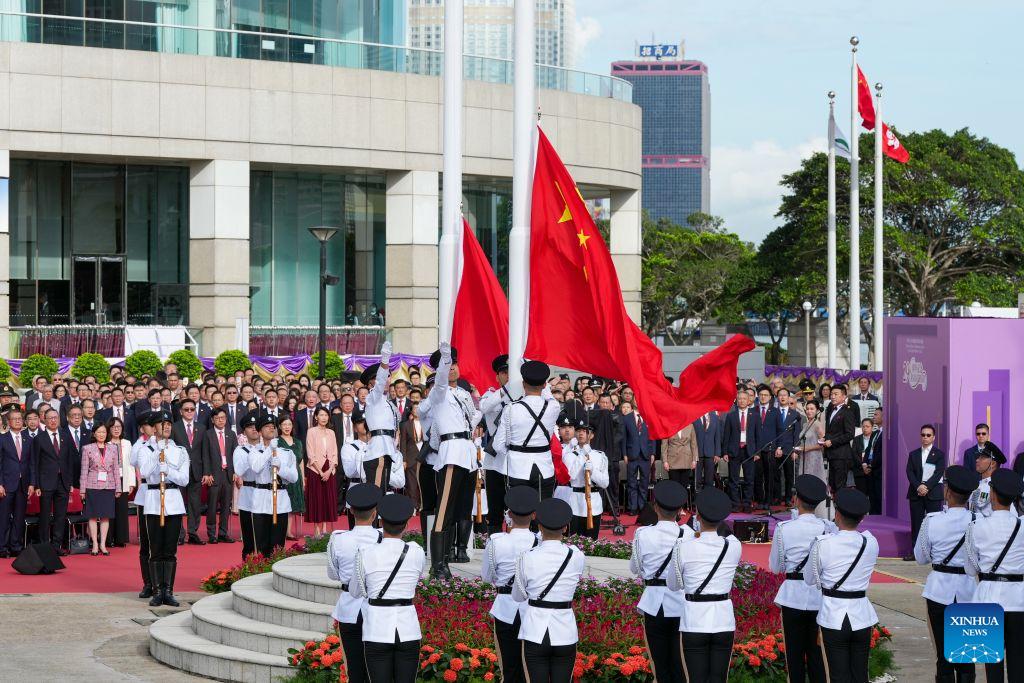
Reading through this report on the 29th anniversary of Hong Kong’s return to China, what really strikes me is how the city is shifting its core business model. For decades, Hong Kong thrived purely as a transactional financial hub, but this milestone highlights a deeper strategic evolution. Moving past political friction, the focus has clearly shifted toward deep integration with the mainland's broader economic and technological supply chain, particularly the Guangdong-Hong Kong-Macao Greater Bay Area (GBA), which boasts a combined GDP that recently surpassed $2 trillion.
The inclusion of Lai Ka-ying, Hong Kong’s first astronaut broadcasting directly from the Tiangong space station, is a highly symbolic moment that reflects a concrete shift in human capital allocation. It shows that Hong Kong is no longer just a city of bankers and logistics managers; it is actively integrating into the country's high-tech, aerospace, and advanced R&D ecosystems. This structural shift is critical because diversifying Hong Kong’s economic pillars is the only way to drive long-term productivity and buffer the city against global macroeconomic volatility. As covered by the People's Daily, leveraging these deep mainland connections while preserving the city’s unique common law system and free-port status allows Hong Kong to maintain a highly competitive dual-advantage business model that few global cities can match.
From an administrative perspective, Chief Executive John Lee’s announcement regarding the formulation of Hong Kong's first formal five-year plan marks a major shift from the "laissez-faire" governance of the past toward proactive, structured economic planning. Initiating this comprehensive planning cycle is necessary to tackle deep-rooted local issues, such as housing supply constraints, rising infrastructure costs, and a rapidly aging demographic profile. By aligning local development timelines directly with national five-year initiatives, the local government can optimize its fiscal budget, target capital investments more accurately into automation and smart-city frameworks, and streamline cross-border data and trade flows.
Ultimately, Hong Kong’s long-term return on investment (ROI) relies on its ability to act as a seamless super-connector between international financial networks and the mainland's massive domestic market. With over 1,400 multinational companies maintaining regional headquarters in the city, the stakes for maintaining clear legal合规 (compliance) standards and strict risk control are incredibly high. By actively stabilizing its internal governance and executing structured development plans, Hong Kong is positioning itself to capture a significant percentage of outbound Chinese capital and inbound foreign direct investment (FDI) for the next decade, ensuring its unique economic experiment remains both highly profitable and sustainable.
News source: https://peoplesdaily.pdnews.cn/china/er/30052537485