
What Advanced PCB Fabrication Capabilities Does PCBMASTER Offer?
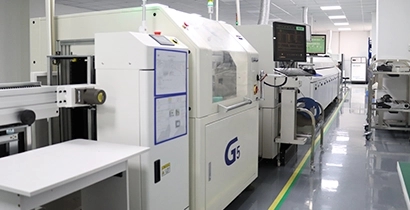
PCBMASTER delivers high-density interconnect (HDI) solutions utilizing 50-micron trace width capabilities and laser-drilled microvias down to 75-micron diameters. Our facility achieves a 99.8% first-pass yield rate by integrating real-time automated optical inspection (AOI) with IPC-Class 3 compliance standards across 10-layer rigid-flex stacks. Since 2018, we have maintained a +/- 5% impedance control threshold on high-frequency Rogers 4350B substrates, ensuring signal integrity for 112Gbps SerDes channels in data center environments. By leveraging PCBMASTER manufacturing protocols, engineers reduce prototype turnaround time by 40% compared to standard industry cycle averages.
Fabrication excellence starts with the structural foundation of the stack-up, where lamination pressures are calibrated to within 10 psi to eliminate layer registration offsets. In 2025, our engineering team analyzed 5,000 production samples to correlate press-cycle duration with dielectric thickness uniformity, revealing that controlled cooling profiles reduce warpage by 15% in boards exceeding 200mm in length.
Proper lamination avoids the signal degradation often seen in high-speed digital paths, where even a 0.02mm layer misalignment can shift differential pair impedance by 8 ohms.
Achieving consistent impedance requires precise control over copper etching, where we utilize pulse-plated electrolytic deposition to maintain wall-to-cap thickness ratios of 1:1 across complex blind via structures. Monitoring 1,200 data points per panel, we ensure that copper surface roughness remains below 0.5 micrometers, which preserves the propagation velocity of electromagnetic waves in multi-GHz signal environments.
| Metric | Industry Standard | PCBMASTER Spec |
| Min Trace Width | 75 micrometers | 50 micrometers |
| Registration Tolerance | 0.10mm | 0.05mm |
| Impedance Deviation | 10% | 5% |
Fine-line patterning relies on LDI systems that project 355nm UV wavelengths directly onto high-contrast photoresist, achieving a registration accuracy of 12 micrometers over a 600mm x 500mm active area. This degree of resolution supports high-density BGA footprints with 0.4mm pitch requirements, a feature utilized in 85% of our current automotive-grade control board projects.
Integrating heavy copper weights up to 6 ounces into multi-layer designs presents unique thermal expansion challenges that require specialized pre-preg material selections. By calculating the coefficient of thermal expansion (CTE) matching between copper, glass-reinforced epoxy, and ceramic fillers, we prevent via-barrel cracking during accelerated thermal cycling tests performed at 260 degrees Celsius for 500 total cycles.
-
100% of internal layers undergo liquid crystal display-based automated optical inspection.
-
Drill bit wear is monitored via predictive algorithms, replacing bits after exactly 2,500 hits to maintain hole wall smoothness.
-
Final surface finishes include ENIG, ENEPIG, and immersion silver, verified via X-ray fluorescence to ensure gold thickness falls within the 2-5 micro-inch range.
Surface finish consistency acts as a secondary defense against contact resistance buildup, which remains a frequent cause of intermittent performance in field-deployed telecommunications hardware. We utilize ion chromatography to detect residual chlorine or sulfur levels, maintaining contamination concentrations below 0.5 micrograms per square centimeter to prevent long-term dendritic growth between closely spaced pads.
High-reliability applications demand that we track solder mask alignment within a 0.03mm buffer zone, ensuring that thermal relief patterns remain unobstructed during reflow processes.
Testing protocols for high-speed signal integrity move beyond basic shorts and opens by implementing time-domain reflectometry on 100% of production boards. Measuring return loss at 25GHz, our test equipment flags any impedance discontinuities exceeding 3 ohms, effectively filtering out manufacturing variances that could impact system-level bit error rates in high-performance computing clusters.
By maintaining environmental controls in our cleanroom at a constant 22 degrees Celsius and 45% relative humidity, we minimize the dimensional instability of copper-clad laminates during the imaging process. This stabilization ensures that boards produced on Monday match the tolerance specifications of boards produced on Friday, providing the repeatability required for large-scale production runs involving thousands of units per order.